

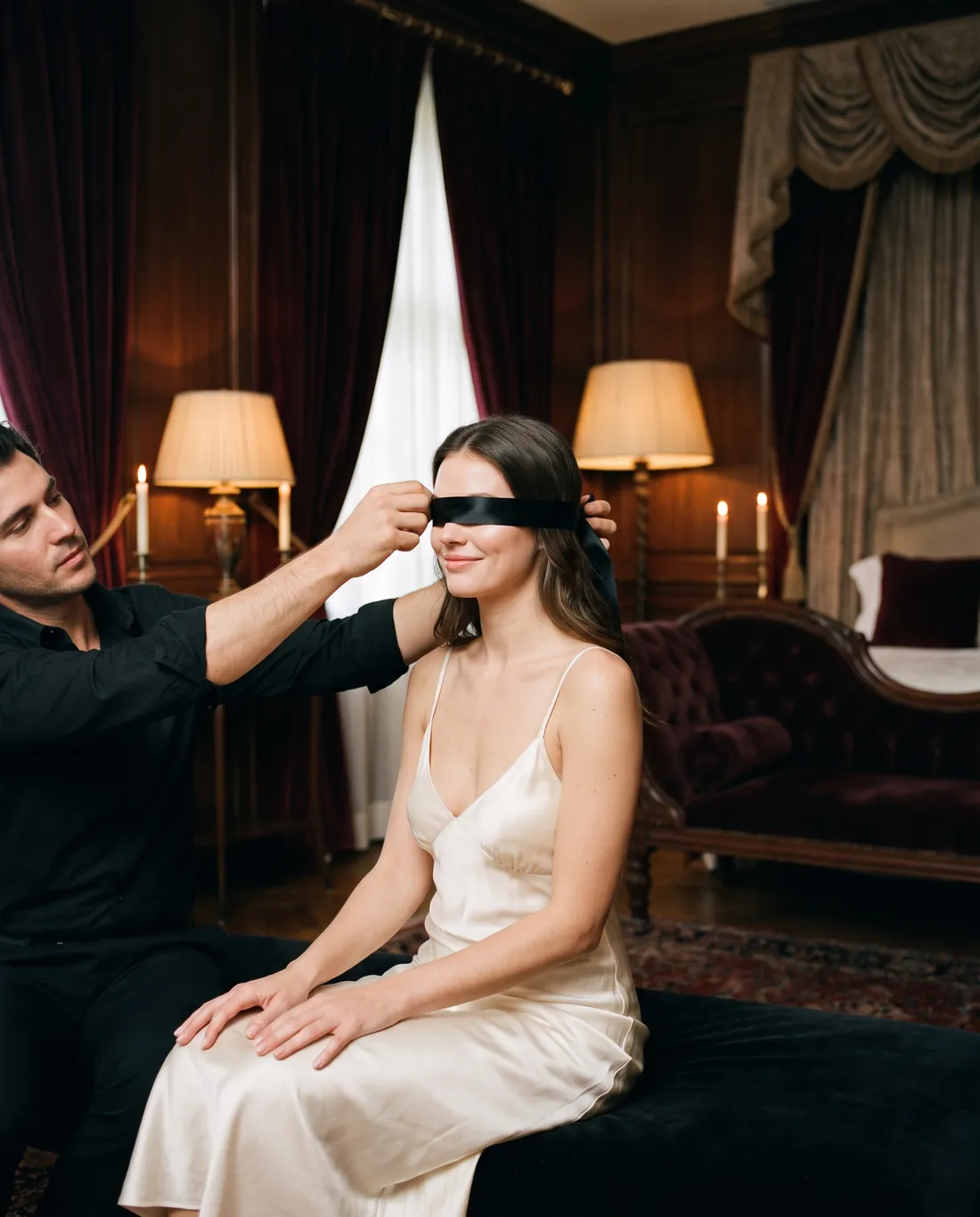
Before you begin
A "scene" is simply a planned stretch of time when you play with power, sensation or restraint, with a clear start and a clear end. A first scene should be short, simple and built entirely from things you both want. The goal isn't intensity. The goal is for both of you to come out the other side saying, "Let's do that again."
If you haven't yet, read The Code. It takes ten minutes, and everything below rests on it.
1. Talk first, outside the bedroom
Choose a relaxed moment with no time pressure: a walk, a quiet dinner, a lazy morning. Not mid-argument, not mid-sex, and not after more than a drink.
- Start with curiosity, not a request. "I read something that made me curious. Can I tell you about it?" invites a conversation. "I want you to tie me up" can feel like pressure.
- Talk about the feelings, not only the acts. Wanting to feel taken care of, in charge, surprised or adored tells your partner far more than a list of activities.
- Make "no" easy. Say out loud that a no, or a not yet, is completely fine and changes nothing between you.
2. Choose two or three things you both want
Fill in the Yes / No / Maybe list separately, then compare. Your first scene comes only from your mutual yeses. Maybes are for later, after you've talked them through.
Good first choices for most couples:
- A blindfold, which heightens every other sensation
- Wrists held, or soft padded cuffs with a quick release
- Slow teasing with hands, a feather or ice
- A firmer voice and simple instructions: "Stay still." "Look at me."
- A few playful spanks with a flat hand on the fleshy part of the bottom
Decide who leads. Many couples find it easier if one person guides the scene and the other receives. You can swap next time.
3. Agree your safeword and a signal
Before anything begins, agree out loud how either of you can slow down or stop. The simplest system is the traffic light:
- Green: all good, keep going.
- Yellow: slow down or ease off, something needs adjusting.
- Red: stop now. Everything stops, restraints come off, and you check in.
Add a non-verbal signal too, such as dropping a small object you're holding, or tapping three times. Our safewords guide covers this in depth.
4. Set the room
A little preparation keeps the scene relaxed and safe.
- Warmth, soft lighting and your phone on silent, but within reach
- Water by the bed, and a blanket for afterwards
- Safety shears or quick-release cuffs if you're using any restraint
- Anything you plan to use, laid out and checked beforehand
- No alcohol or anything else that blurs judgement. Consent needs clear heads.
Restraint safety
Never leave a restrained person alone, even for a moment. Nothing goes around the neck. Check hands and feet often: cold, pale, tingling or numb fingers mean loosen or release straight away. Keep restraint loose enough to slip a finger under.
5. The scene: a sample 30 minutes
This is only a shape to borrow. Keep it short. Thirty minutes feels much longer when you're blindfolded.
- 0 minA clear start. A word, a gesture or simply "Are you ready?" and a yes.
- 2 minThe blindfold goes on. Slow touch, a few quiet words, nothing rushed.
- 8 minWrists held above the head, or soft cuffs fastened. A check-in: "Colour?" "Green."
- 10 minTeasing: hands, a feather, a cold fingertip, a firm instruction to stay still.
- 20 minAnother check-in. Build a little, or stay where it feels good.
- 28 minRestraints off, blindfold off, slowly. Eye contact.
- 30 minA clear end, then straight into aftercare.
Check in more often than feels necessary. A hand squeeze that gets a squeeze back keeps things flowing without breaking the mood.
6. Aftercare, straight away
When the scene ends, the care begins. Blanket, water, closeness and kind words. Tell each other one thing you loved. Both partners need this, including the one who led. Read the aftercare guide to plan it before you start.
7. Talk about it the next day
Once you're both rested, ask three simple questions: What did you love? What would you change? What would you like to try next time? Feelings can surface hours later, so a gentle check-in the next day matters.
Worksheet: our first scene plan
Fill it in together, then print it or keep this page open. Nothing you type is saved or sent anywhere.
Quick check
Finish the quick check above, or mark it complete yourself.